

过程工程学报 ›› 2026, Vol. 26 ›› Issue (9): 1031-1041.DOI: 10.12034/j.issn.1009-606X.225304
李思阳( ), 朱玉洁, 陈瑜洲, 刘康, 肖朋(), 孙长宇
收稿日期:2025-12-05
修回日期:2026-02-13
出版日期:2026-03-11
发布日期:2026-09-28
通讯作者:
肖朋 lisiyang15@163.com;xpmail@yeah.net
作者简介:李思阳,硕士研究生,化学工程与技术专业,E-mail: lisiyang15@163.com;基金资助:
Siyang LI(), Yujie ZHU, Yuzhou CHEN, Kang LIU, Peng XIAO(), Changyu SUN
Received:2025-12-05
Revised:2026-02-13
Online:2026-03-11
Published:2026-09-28
Contact:
Peng XIAO lisiyang15@163.com;xpmail@yeah.net
摘要:
降压开采是天然气水合物开采中最具前景的技术之一,但开采过程中水合物沉积层与井筒均面临水合物二次生成风险。本实验研究了分解水中气泡的产生、演变规律及对水合物再生成的影响。结果表明,水合物分解过程会伴随大量气泡生成;而未生成水合物的甲烷饱和水,经过同样的降压过程后并无气泡产生。分解压力较高时,分解水中气泡数量更多,且存在大量直径小于5 µm的微气泡。静置过程中,分解水中气泡发生聚并、尺寸增大,但总体数量较为稳定。气泡可为水合物生成提供成核位点和传质通道,对水合物再生有促进作用;在3 MPa分解条件下,水合物再生过程的水转化率较常压分解提升约12%。此外,再生成压力越高,体系达到平衡时的水转化率越高。水合物在气泡表面再次生成时,气泡逐渐发生凹陷变形,最终呈现半透明化状态,气泡内的气体完全转化为水合物。与纯水体系相比,在分解水中添加表面活性剂十二烷基硫酸钠(SDS),水合物的生成速率更快,且生成的水合物膜呈现出典型的蓬松多孔结构,这种结构减小了传质阻力。本研究结果证实,分解水中的微气泡是强化水合物再生成的重要因素,可为降压开采时水合物再生成行为的调控提供理论支撑。
中图分类号:
李思阳, 朱玉洁, 陈瑜洲, 刘康, 肖朋, 孙长宇. 分解水中气泡演变及其对水合物再生成的强化机理[J]. 过程工程学报, 2026, 26(9): 1031-1041.
Siyang LI, Yujie ZHU, Yuzhou CHEN, Kang LIU, Peng XIAO, Changyu SUN. Evolution of bubbles in dissociated water and their enhancement mechanism for hydrate reformation[J]. The Chinese Journal of Process Engineering, 2026, 26(9): 1031-1041.
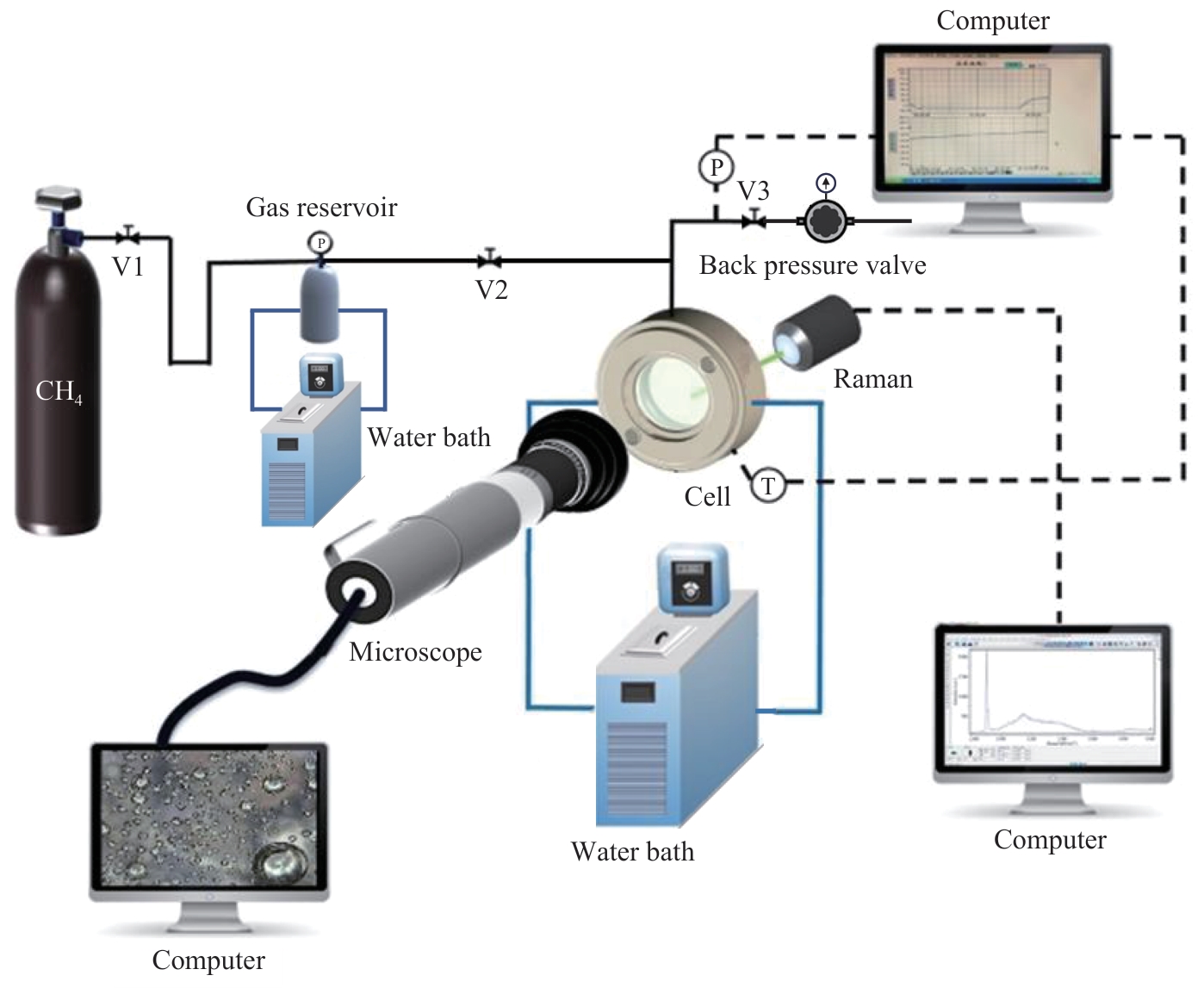
图1 实验装置示意图
Fig.1 Schematic diagram of the experimental apparatus
| Runs | System | Dissociation pressure/MPa | Dissociation temperature/K |
|---|---|---|---|
| 1 | Pure water | 3.0 | 276.15 |
| 2 | Pure water | 1.5 | 276.15 |
| 3 | Pure water | 0.1 | 276.15 |
| 4 | 0.01wt% SDS solution | 3.0 | 276.15 |
表1 水合物分解实验条件
Table 1 Experimental conditions for hydrate dissociation
| Runs | System | Dissociation pressure/MPa | Dissociation temperature/K |
|---|---|---|---|
| 1 | Pure water | 3.0 | 276.15 |
| 2 | Pure water | 1.5 | 276.15 |
| 3 | Pure water | 0.1 | 276.15 |
| 4 | 0.01wt% SDS solution | 3.0 | 276.15 |
| Runs | System | Dissociation pressure/MPa | Dissociation temperature/K | Reformation pressure/MPa | Reformation temperature/K |
|---|---|---|---|---|---|
| 5 | Pure water | 3.0 | 276.15 | 4.0 | 273.15 |
| 6 | Pure water | 3.0 | 276.15 | 5.0 | 273.15 |
| 7 | Pure water | 3.0 | 276.15 | 7.3 | 273.15 |
| 8 | Pure water | 1.5 | 276.15 | 5.0 | 273.15 |
| 9 | Pure water | 0.1 | 276.15 | 5.0 | 273.15 |
| 10 | Pure water | - | - | 5.0 | 273.15 |
| 11 | 0.01wt% SDS solution | 3.0 | 276.15 | 5.0 | 273.15 |
| 12 | 0.005wt% SDS solution | 3.0 | 276.15 | 5.0 | 273.15 |
| 13 | 0.0025wt% SDS solution | 3.0 | 276.15 | 5.0 | 273.15 |
表2 水合物再生成实验条件
Table 2 Experimental conditions for hydrate reformation
| Runs | System | Dissociation pressure/MPa | Dissociation temperature/K | Reformation pressure/MPa | Reformation temperature/K |
|---|---|---|---|---|---|
| 5 | Pure water | 3.0 | 276.15 | 4.0 | 273.15 |
| 6 | Pure water | 3.0 | 276.15 | 5.0 | 273.15 |
| 7 | Pure water | 3.0 | 276.15 | 7.3 | 273.15 |
| 8 | Pure water | 1.5 | 276.15 | 5.0 | 273.15 |
| 9 | Pure water | 0.1 | 276.15 | 5.0 | 273.15 |
| 10 | Pure water | - | - | 5.0 | 273.15 |
| 11 | 0.01wt% SDS solution | 3.0 | 276.15 | 5.0 | 273.15 |
| 12 | 0.005wt% SDS solution | 3.0 | 276.15 | 5.0 | 273.15 |
| 13 | 0.0025wt% SDS solution | 3.0 | 276.15 | 5.0 | 273.15 |
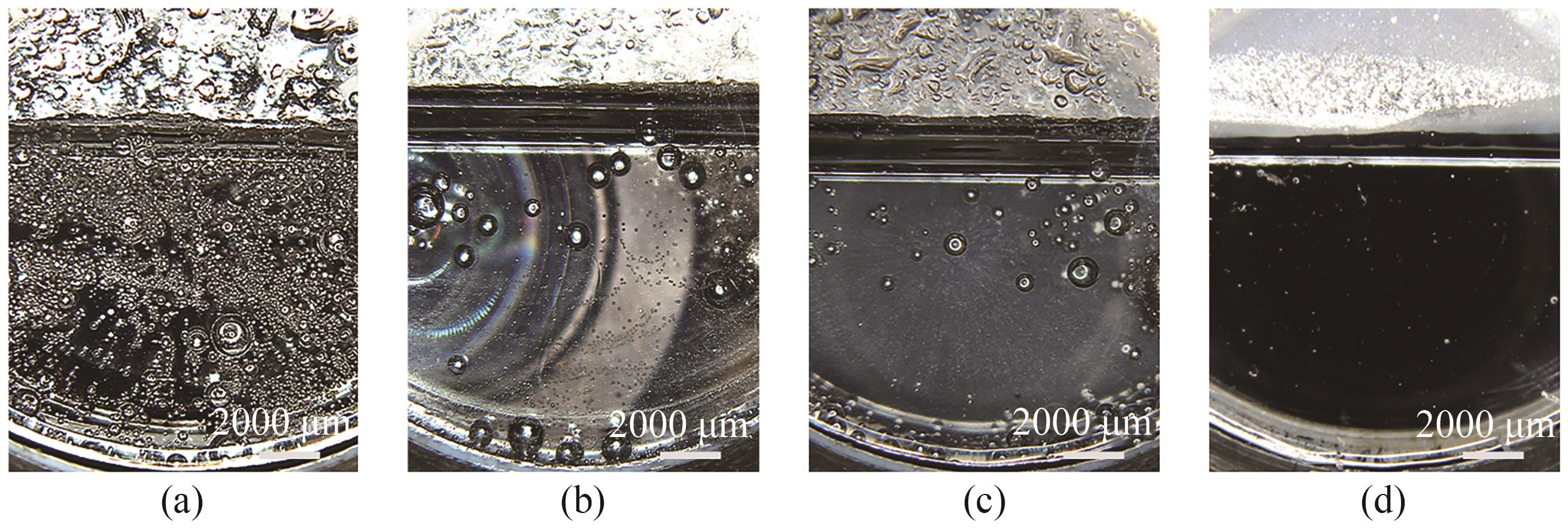
图2 不同分解条件下液相中残留气泡的数量比较:(a) 分解压力3.0 MPa;(b) 分解压力1.5 MPa;(c) 分解压力0.1 MPa;(d) 甲烷饱和水溶液
Fig.2 Comparison of residual bubble population in the liquid phase under different dissociation conditions: (a) dissociation pressure of 3.0 MPa; (b) dissociation pressure of 1.5 MPa; (c) dissociation pressure of 0.1 MPa; (d) methane-saturated aqueous solution
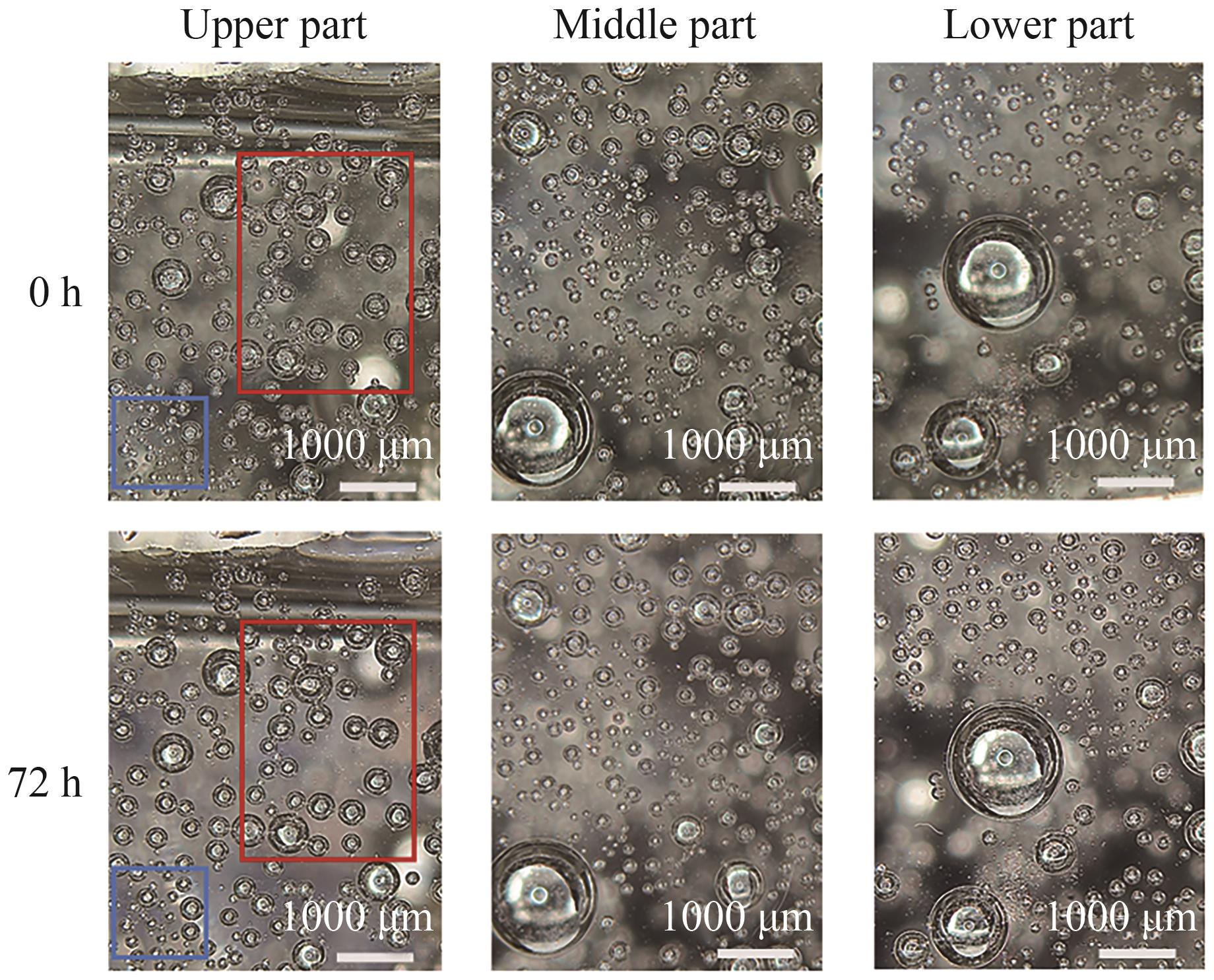
图3 3.0 MPa分解压力下液相中不同位置的气泡在72 h前后的形态变化
Fig.3 Morphologies of bubbles at different locations in the liquid phase before and after 72 h under 3.0 MPa decomposition pressure
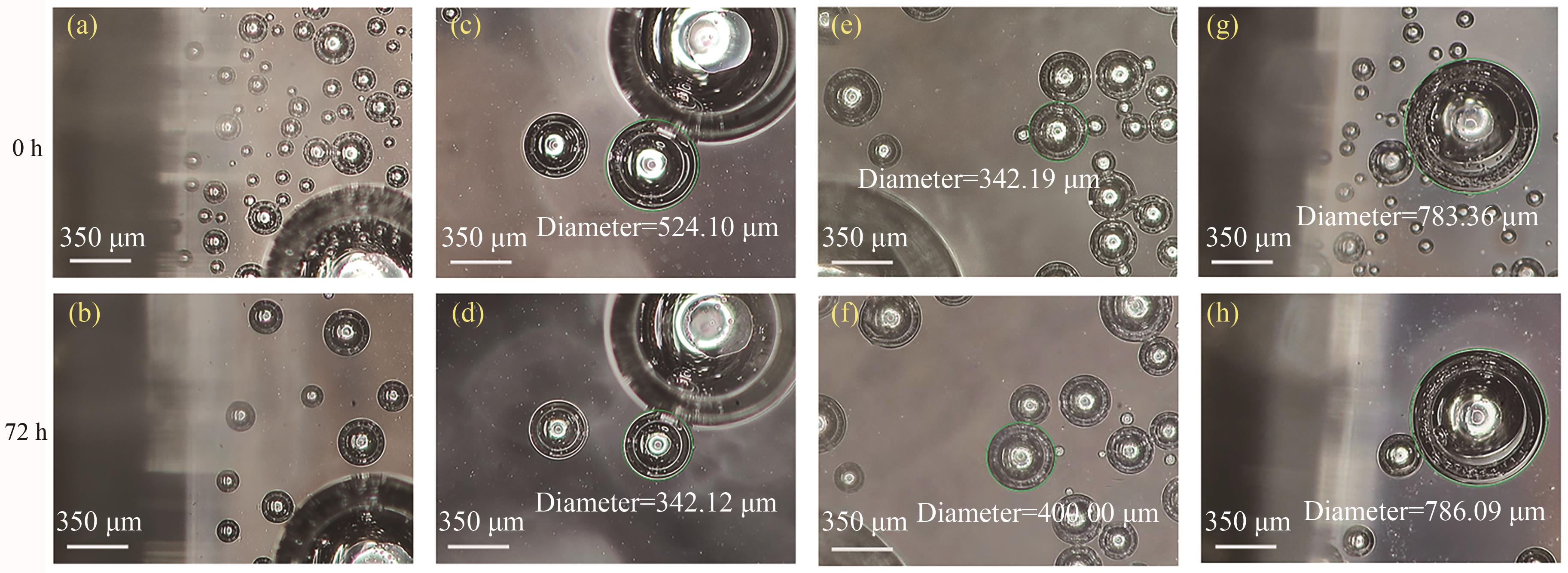
图4 液相中气泡状态的主要典型变化
Fig.4 Typical morphology changes of bubbles in the liquid phase
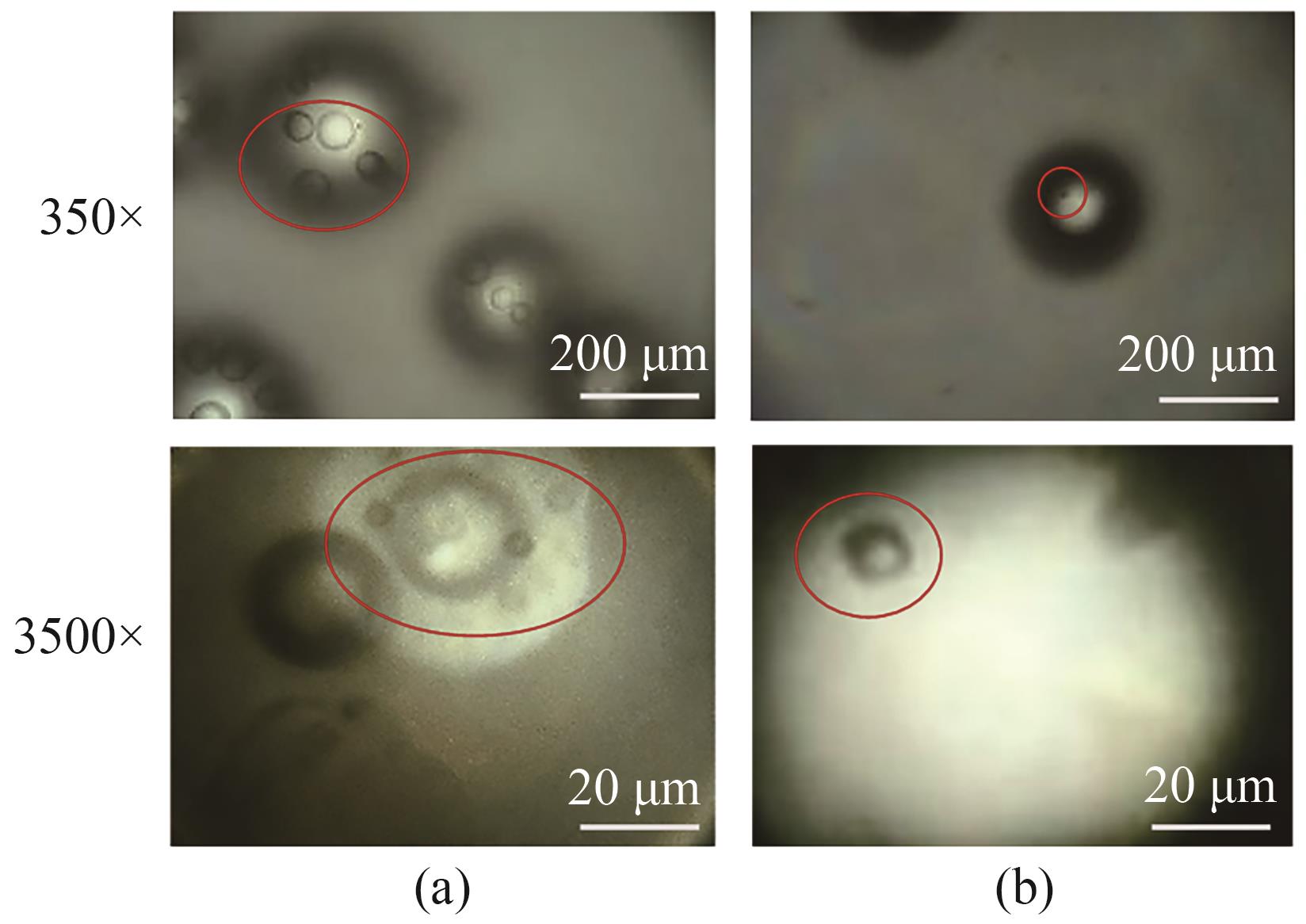
图5 高倍下不同分解压力分解水中的气泡形貌:(a) 3.0 MPa;(b) 0.1 MPa
Fig.5 Bubble morphologies in dissociated water under different dissociation pressures at high magnification: (a) 3.0 MPa; (b) 0.1 MPa
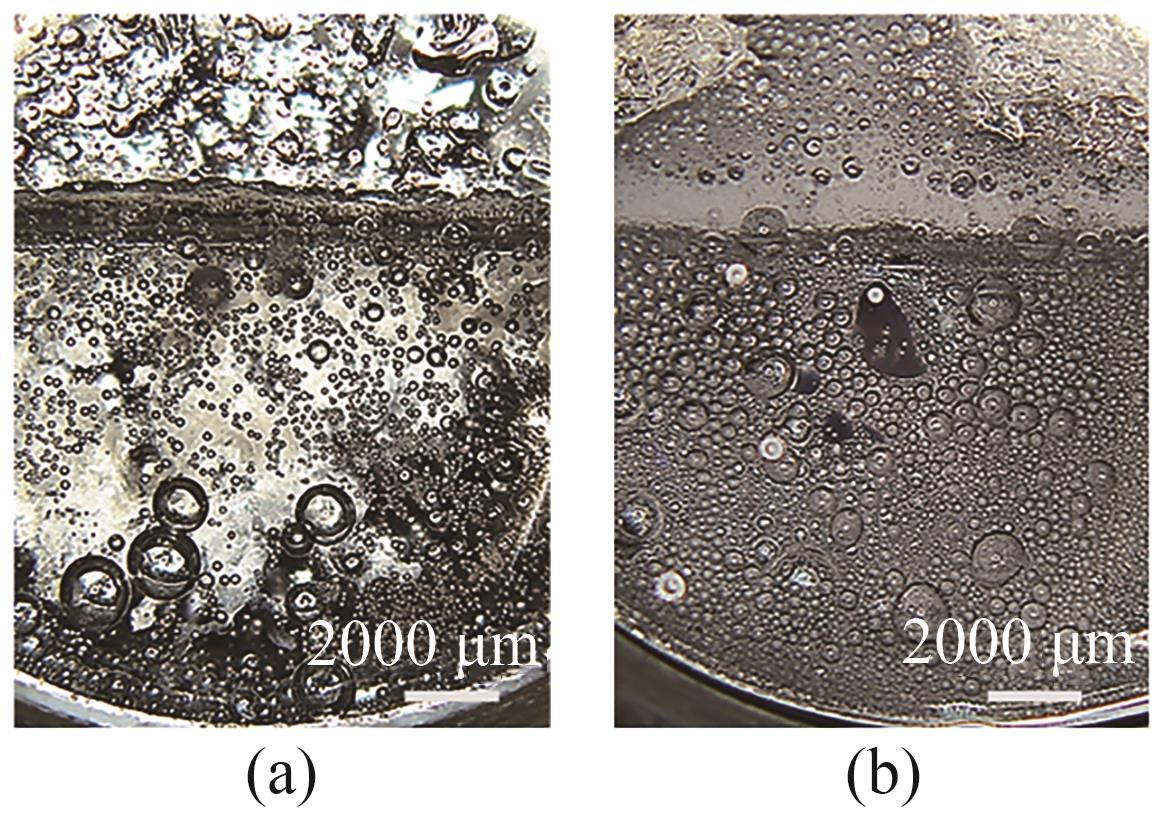
图6 纯水与SDS体系中残留气泡的数量对比:(a) 纯水;(b) SDS溶液
Fig.6 Comparison of the residual bubble population in pure water and SDS solution: (a) pure water; (b) SDS solution
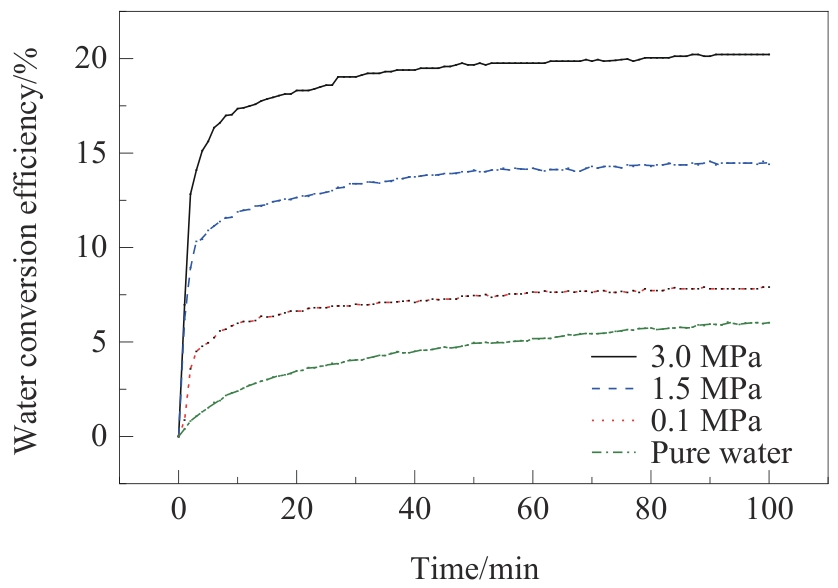
图7 水合物在不同压力下分解后再生成的水转化率
Fig.7 Water conversion efficiency of hydrate reformation after hydrate dissociation at different pressures
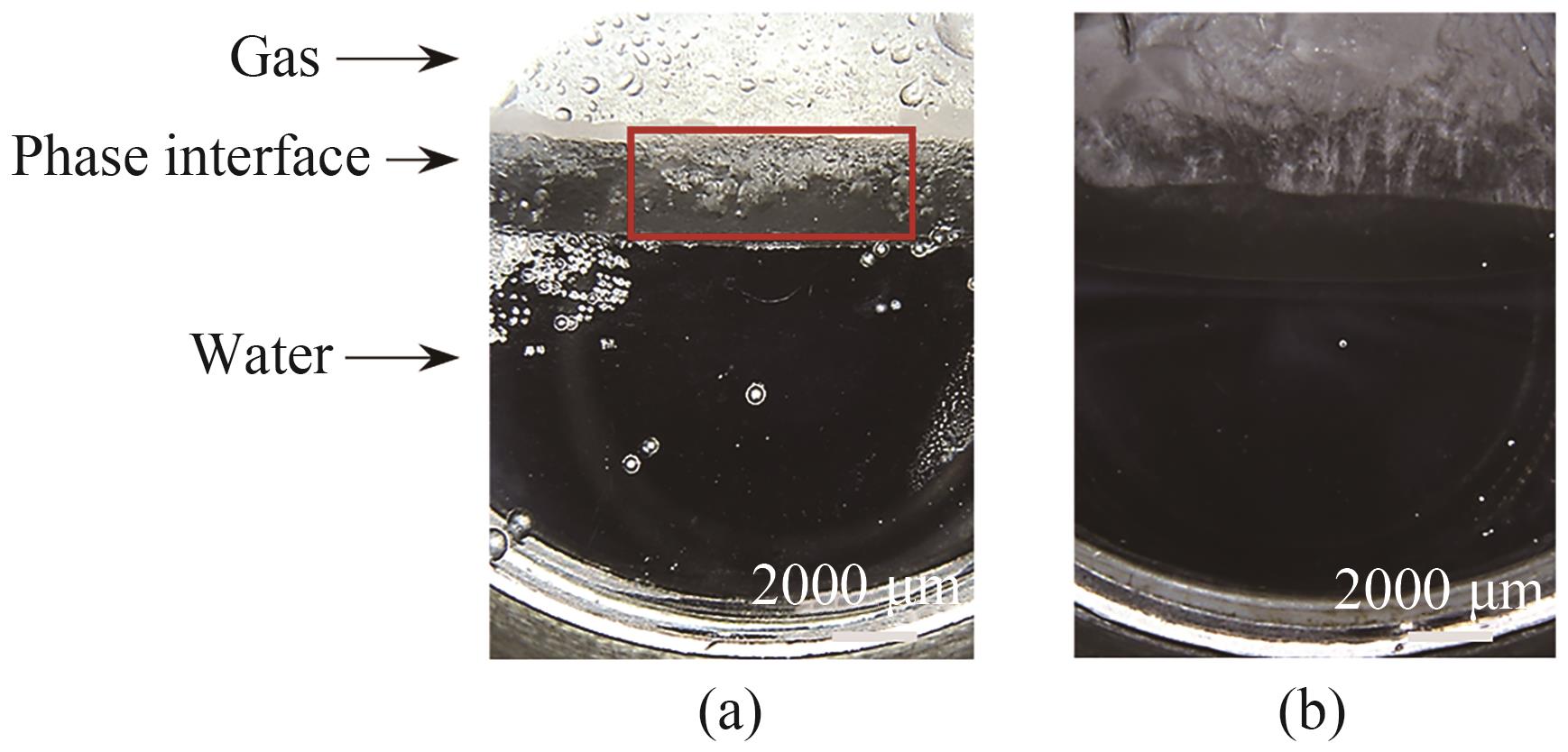
图8 经不同压力分解后水合物再生成的形貌:(a) 3.0 MPa;(b) 0.1 MPa
Fig.8 Morphologies of hydrate reformation after hydrate dissociation under different pressures: (a) 3.0 MPa; (b) 0.1 MPa
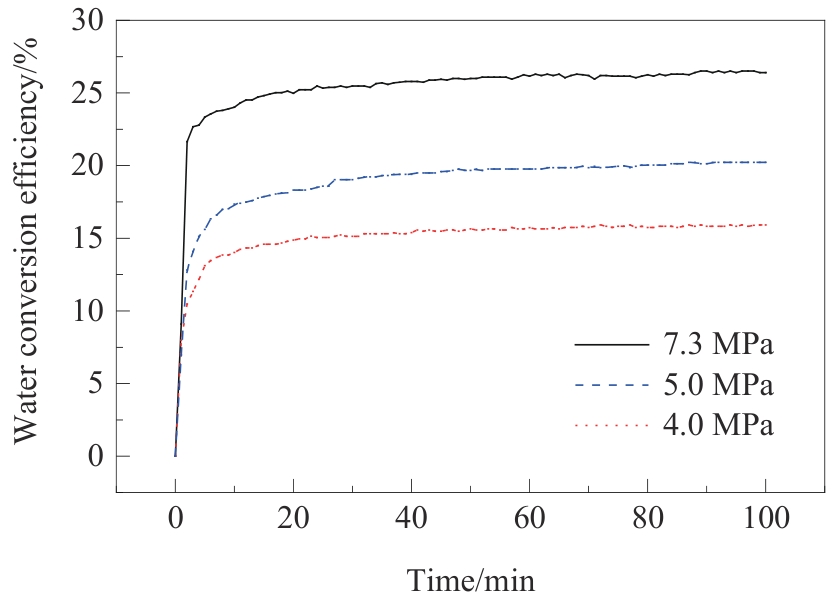
图9 不同再生成压力下水合物再生成的水转化率
Fig.9 Water conversion efficiency of hydrate reformation under different reformation pressures
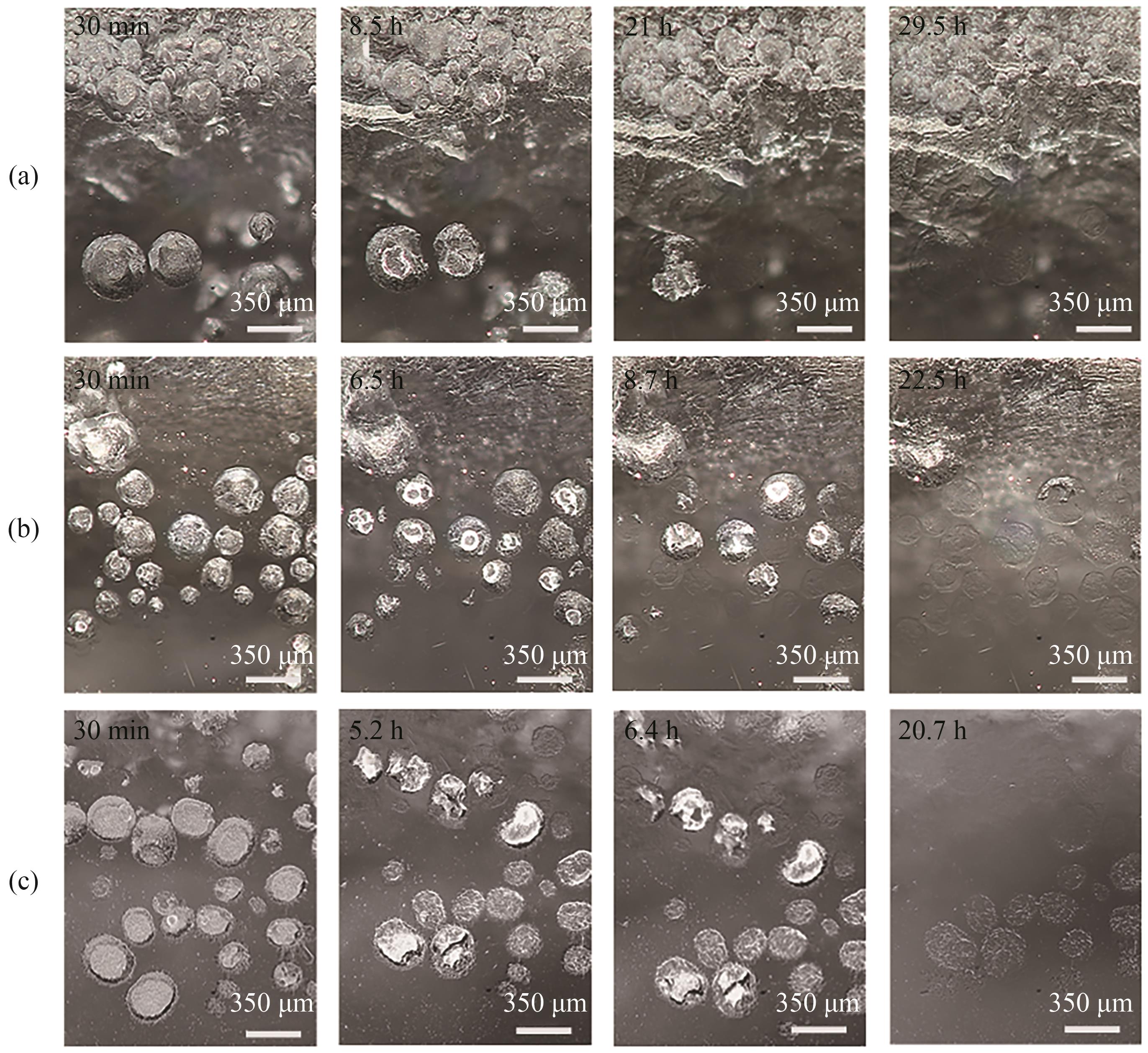
图10 不同压力下再生成过程中水合物形貌随时间的变化过程:(a) 4.0 MPa;(b) 5.0 MPa;(c) 7.3 MPa
Fig.10 Changes in hydrate morphology with time during the reformation process at various pressures: (a) 4.0 MPa; (b) 5.0 MPa; (c) 7.3 MPa
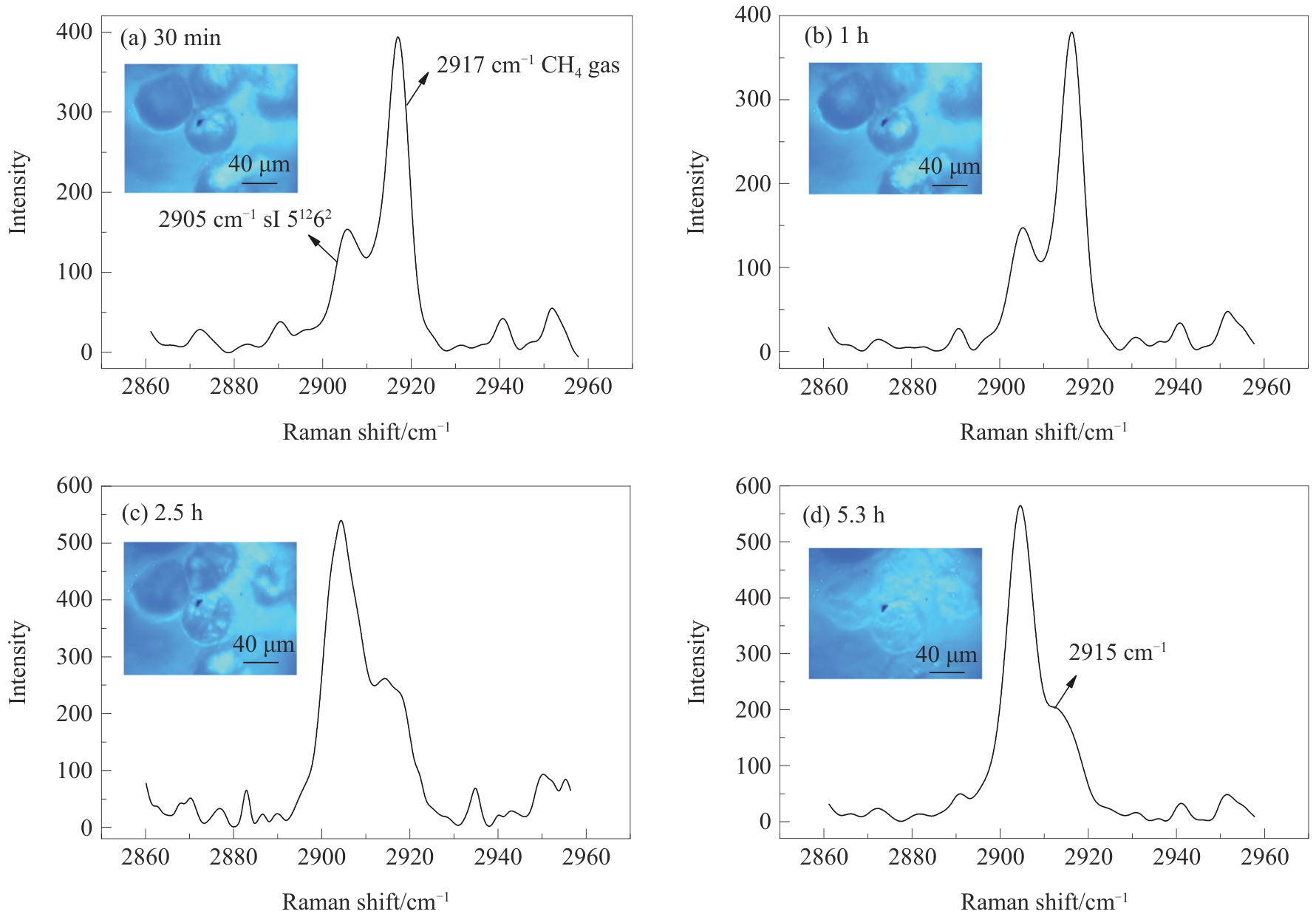
图11 7.3 MPa下再生成过程中水合物的共聚焦显微图像及对应的拉曼谱图随时间的变化:(a) 30 min;(b) 1 h;(c) 2.5 h;(d) 5.3 h
Fig.11 Changes in confocal microscopic images and the corresponding Raman spectra of hydrates with time during reformation at 7.3 MPa: (a) 30 min; (b) 1 h; (c) 2.5 h; (d) 5.3 h
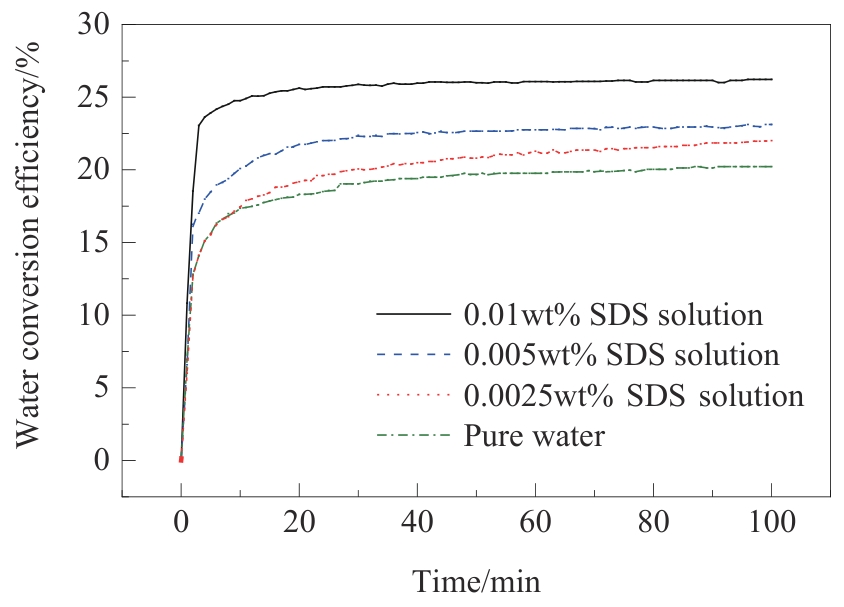
图12 SDS溶液及纯水中水合物再生成的水转化率
Fig.12 Water conversion efficiencies of hydrate reformation in SDS solution and pure water
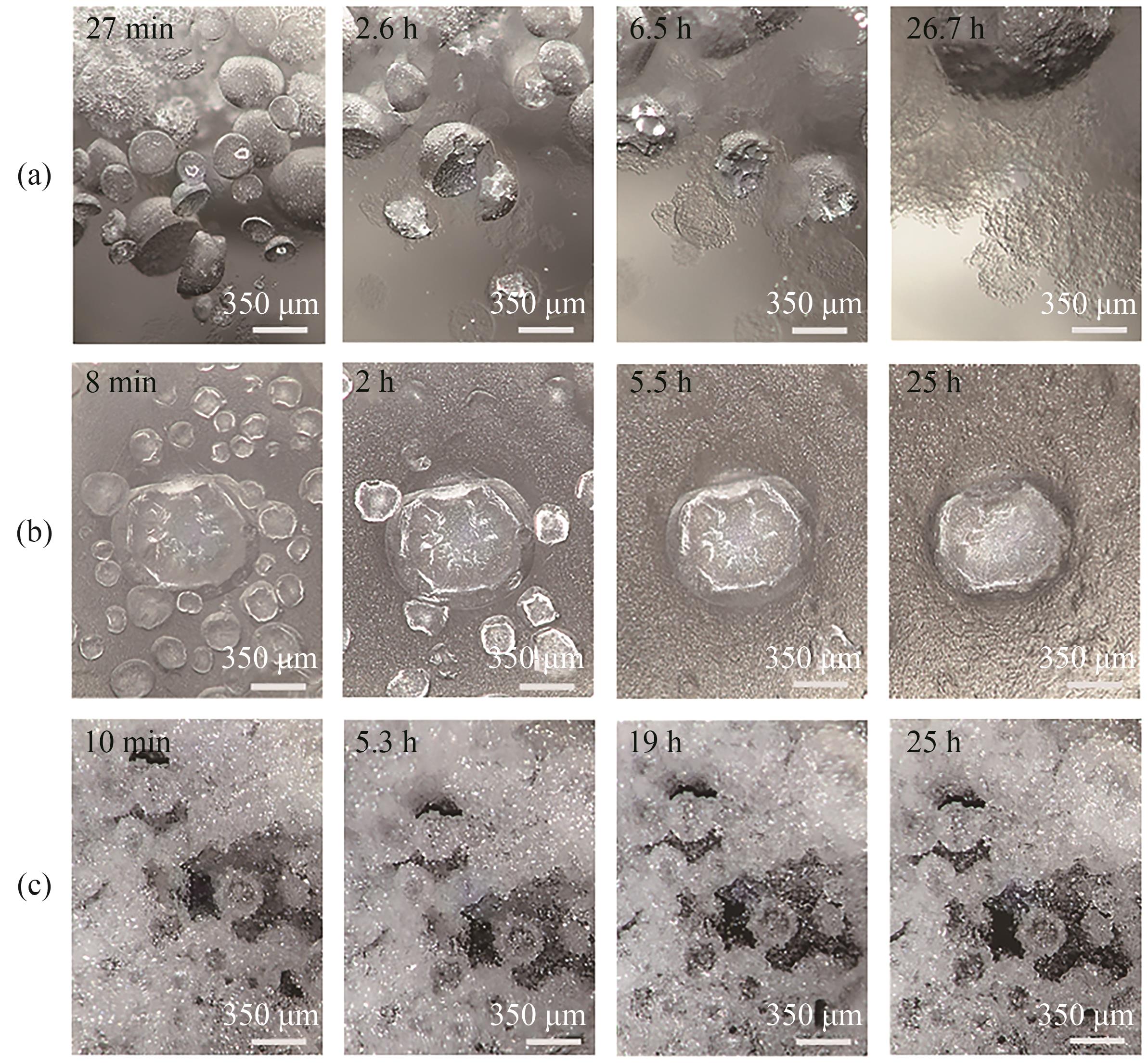
图13 不同浓度SDS溶液体系下水合物再生成过程中的形貌随时间的变化过程:(a) 0.0025wt% SDS溶液;(b) 0.005wt% SDS溶液;(c) 0.01wt% SDS溶液
Fig.13 Changes in hydrate morphology during the reformation process in SDS solutions: (a) 0.0025wt% SDS solution; (b) 0.005wt% SDS solution; (c) 0.01wt% SDS solution
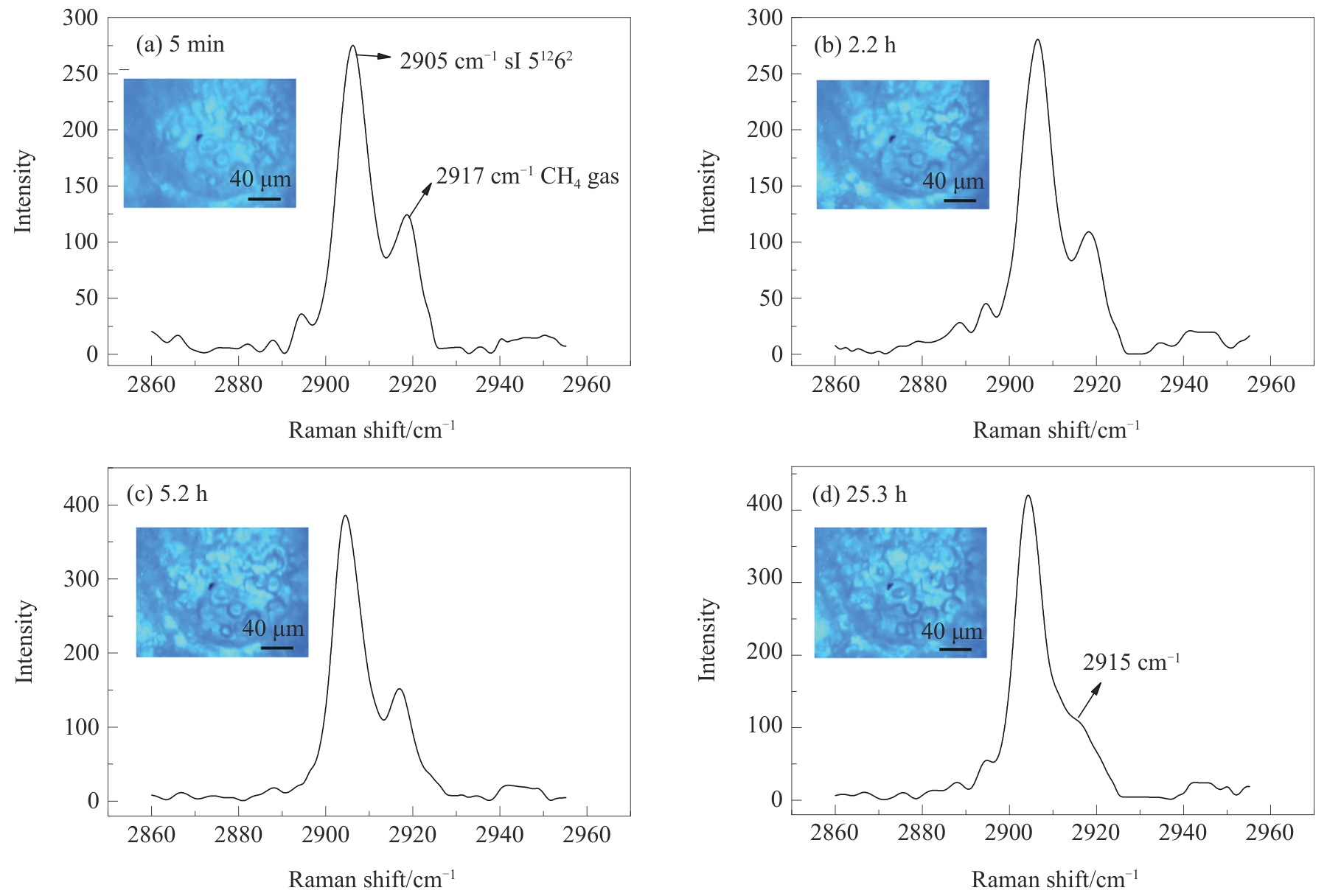
图14 0.01wt% SDS溶液再生成过程中水合物的共聚焦显微图像及对应的拉曼谱图随时间的变化:(a) 5 min; (b) 2.2 h; (c) 5.2 h; (d) 25.3 h
Fig.14 Changes in confocal microscopic images and the corresponding Raman spectra of hydrates with time during reformation in 0.01wt% SDS solution: (a) 5 min; (b) 2.2 h; (c) 5.2 h; (d) 25.3 h
| [1] | Sloan Jr E D, Koh C A. Clathrate hydrates of natural gases [M]. Milton: Taylor & Francis Group, 2007: 1-5. |
| [2] | Walsh M R, Hancock S H, Wilson S J, et al. Preliminary report on the commercial viability of gas production from natural gas hydrates [J]. Energy Economics, 2009, 31(5): 815-823. |
| [3] | 李清平, 周守为, 赵佳飞, 等. 天然气水合物开采技术研究现状与展望 [J]. 中国工程科学, 2022, 24(3): 214-224. |
| Li Q P, Zhou S W, Zhao J F, et al. Research status and prospects of natural gas hydrate exploitation technology [J]. Strategic Study of CAE, 2022, 24(3): 214-224. | |
| [4] | Sloan Jr E D. Natural gas hydrates [J]. Journal of Petroleum Technology, 1991, 43(12): 1414-1417. |
| [5] | Wang B, Dong H S, Liu Y Z, et al. Evaluation of thermal stimulation on gas production from depressurized methane hydrate deposits [J]. Applied Energy, 2018, 227: 710-718. |
| [6] | Seol Y, Myshakin E. Experimental and numerical observations of hydrate reformation during depressurization in a core-scale reactor [J]. Energy & Fuels, 2011, 25(3): 1099-1110. |
| [7] | Sun S C, Zhao J, Yu D J. Dissociation enthalpy of methane hydrate in salt solution [J]. Fluid Phase Equilibria, 2018, 456: 92-97. |
| [8] | Liu X L, Flemings P B. Dynamic multiphase flow model of hydrate formation in marine sediments [J]. Journal of Geophysical Research-Solid Earth, 2007, 112(B3): B03101. |
| [9] | Yagasaki T, Matsumoto M, Andoh Y, et al. Effect of bubble formation on the dissociation of methane hydrate in water: a molecular dynamics study [J]. Journal of Physical Chemistry B, 2014, 118(7): 1900-1906. |
| [10] | Zhang Y, Zhao L, Deng S, et al. Effect of nanobubble evolution on hydrate process: a review [J]. Journal of Thermal Science, 2019, 28(5): 948-961. |
| [11] | Bagherzadeh S A, Alavi S, Ripmeester J, et al. Formation of methane nano-bubbles during hydrate decomposition and their effect on hydrate growth [J]. The Journal of Chemical Physics, 2015, 142(21): 214701. |
| [12] | Uchida T, Yamazaki K, Gohara K. Generation of micro- and nano-bubbles in water by dissociation of gas hydrates [J]. Korean Journal of Chemical Engineering, 2016, 33(5): 1749-1755. |
| [13] | Guo Y, Xiao W, Pu W F, et al. CH4 nanobubbles on the hydrophobic solid-water interface serving as the nucleation sites of methane hydrate [J]. Langmuir, 2018, 34(34): 10181-10186. |
| [14] | Cheng C X, Hu S, Zhang Z P, et al. Fast nucleation of methane hydrate enhanced by bulk MNBs combined with analysis of memory effect [J]. Fuel, 2022, 308: 122080. |
| [15] | Takahashi M, Kawamura T, Yamamoto Y, et al. Effect of shrinking microbubble on gas hydrate formation [J]. Journal of Physical Chemistry B, 2003, 107(10): 2171-2173. |
| [16] | Jing Z Y, Lin Y X, Cheng C X, et al. Fast formation of hydrate induced by micro-nano bubbles: a review of current status [J]. Processes, 2023, 11(4): 1019. |
| [17] | Zhang W, Li H Y, Xu C G, et al. Research progress on the effects of nanoparticles on gas hydrate formation [J]. RSC Advances, 2022, 12(31): 20227-20238. |
| [18] | Uchida T, Ebinuma T, Narita H. Observations of CO2-hydrate decomposition and reformation processes [J]. Journal of Crystal Growth, 2000, 217(1): 189-200. |
| [19] | Uchida T, Yamazaki K, Gohara K. Gas nanobubbles as nucleation acceleration in the gas-hydrate memory effect [J]. The Journal of Physical Chemistry C, 2016, 120(47): 26620-26629. |
| [20] | Zhang J, Yin Z, Khan S A, et al. Path-dependent morphology of CH4 hydrates and their dissociation studied with high-pressure microfluidics [J]. Lab on a Chip, 2024, 24(6): 1602-1615. |
| [21] | Xiao P, Li J J, Chen W, et al. Enhanced formation of methane hydrate from active ice with high gas uptake [J]. Nature Communications, 2023, 14(1): 8068. |
| [22] | Dressaire E, Bee R, Bell D C, et al. Interfacial polygonal nanopatterning of stable microbubbles [J]. Science, 2008, 320(5880): 1198-1201. |
| [23] | Ma X T, Li M B, Xu X F, et al. On the role of surface charge and surface tension tuned by surfactant in bulk nanobubbles [J]. Applied Surface Science, 2023, 608: 155232. |
| [24] | Xiao P, Chen G J, Sun C Y, et al. Effect of reciprocating impact on methane hydrate formation and dissociation [J]. Energy & Fuels, 2021, 35(2): 1336-1346. |
| [25] | 陈光进, 孙长宇, 马庆兰. 气体水合物科学与技术 [M]. 北京: 化学工业出版社, 2008: 1-5. |
| [26] | Zhu Y J, Xie Y, Zhong J R, et al. In situ investigation on the morphology and formation kinetics of a CO2/N2 mixed hydrate film [J]. ACS Sustainable Chemistry & Engineering, 2023, 11(12): 4678-4689. |
| [27] | Sun B J, Liu Z, Wang Z Y, et al. Experimental and modeling investigations into hydrate shell growth on suspended bubbles considering pore updating and surface collapse [J]. Chemical Engineering Science, 2019, 207: 1-16. |
| [28] | Li X X, Liu M, Li Q P, et al. Visual study on methane hydrate formation and depressurization-induced methane hydrate dissociation processes in a micro-packed bed reactor [J]. Fuel, 2023, 332: 125980. |
| [29] | Li X X, Wang C N, Li Q P, et al. Experimental observation of formation and dissociation of methane hydrate in a micromodel [J]. Chemical Engineering Science, 2022, 248: 117227. |
| [30] | Okutani K, Kuwabara Y, Mori Y H. Surfactant effects on hydrate formation in an unstirred gas/liquid system: an experimental study using methane and sodium alkyl sulfates [J]. Chemical Engineering Science, 2008, 63(1): 183-194. |
| [31] | Hayama H, Mitarai M, Mori H, et al. Surfactant effects on crystal growth dynamics and crystal morphology of methane hydrate formed at gas/liquid interface [J]. Crystal Growth & Design, 2016, 16(10): 6084-6088. |
| [32] | Zhang J S, Lee S, Lee J W. Kinetics of methane hydrate formation from SDS solution [J]. Industrial & Engineering Chemistry Research, 2007, 46(19): 6353-6359. |
| [33] | Lin Z Y, Wu D T, Lin S T. Equilibrium and transport properties of methane at the methane/water interface with the presence of SDS [J]. The Journal of Physical Chemistry C, 2018, 122(51): 29259-29267. |
| [1] | 郑紫雨 南睿 吕文浩 李乐妍 刘超伟 刘涛 侯凯军 王智峰 范怡平. 新型内构件汽提器中两相流动-传质特性[J]. 过程工程学报, 2026, 26(7): 715-725. |
| [2] | 董鑫 薛璨 单永瑞 冯颖 张建伟. 射流强化气液两相流体动力学特性的数值模拟[J]. 过程工程学报, 2025, 25(8): 820-833. |
| [3] | 李枫 明亮 邢雷 蒋明虎 赵立新 关帅. 变径圆管内离散气泡运动行为及变形特性[J]. 过程工程学报, 2025, 25(4): 341-353. |
| [4] | 施炜斌 龙姗姗 杨晓钢 黄辉 段念. 考虑气泡形状及气泡诱导湍流的聚并模型[J]. 过程工程学报, 2025, 25(2): 169-178. |
| [5] | 田文鑫 杜浩 刘彪 王少娜. 微气泡强化碳酸化法制备纳米碳酸钙[J]. 过程工程学报, 2025, 25(2): 179-189. |
| [6] | 李娟娟 肖朋 刘康 杨博旭 亓美霞 朱玉洁 陈光进 孙长宇. 活性冰中水合物生成放大实验研究[J]. 过程工程学报, 2025, 25(10): 1088-1095. |
| [7] | 罗节文 王雅彬 李稳 王国胜 赵碧丹 王军武. 气固鼓泡床结构双流体模型及其模拟验证[J]. 过程工程学报, 2024, 24(4): 435-444. |
| [8] | 乔勉 宫源 王兰英 杨卓 李春雷 田玉琴 岳文菲. 喷射器制备微气泡研究进展[J]. 过程工程学报, 2024, 24(12): 1375-1386. |
| [9] | 杨晓梅 肖朋 孙长宇 陈光进. 轻烃和二氧化碳水合物生成动力学促进剂研究进展[J]. 过程工程学报, 2024, 24(10): 1137-1148. |
| [10] | 裴东号 曾乐翔 高梦蝶 阮锦程 曹军. 耦合传质的CO2气泡上升过程数值研究[J]. 过程工程学报, 2023, 23(9): 1244-1255. |
| [11] | 王立恒 管小平 杨宁 牟祖泽. CO2微气泡强化纳米碳酸钙的制备及传递-反应分析[J]. 过程工程学报, 2023, 23(9): 1313-1324. |
| [12] | 郝晓磊 唐猛 王若瑾 王德武 张少峰. 气固摆动流化床的气泡运动特性[J]. 过程工程学报, 2023, 23(4): 512-522. |
| [13] | 霍元浩 杨刚 张会臣. 障碍微通道内气液两相流运动特性[J]. 过程工程学报, 2023, 23(12): 1617-1626. |
| [14] | 董鑫 刘易诺 叶陈 张建伟 冯颖. 气泡羽流气液两相流动特性的研究进展[J]. 过程工程学报, 2023, 23(1): 15-24. |
| [15] | 林纬 王章伟 汪威 李吉敏 郭紫芯 向晋 邱心缘 詹宏阳 喻九阳. 电极上气泡分离行为及其强化技术研究进展[J]. 过程工程学报, 2022, 22(9): 1147-1158. |
| 阅读次数 | ||||||
|
全文 |
|
|||||
|
摘要 |
|
|||||

